






Reduce solid waste disposal costs, achieve resource recovery revenue from low-value solid waste
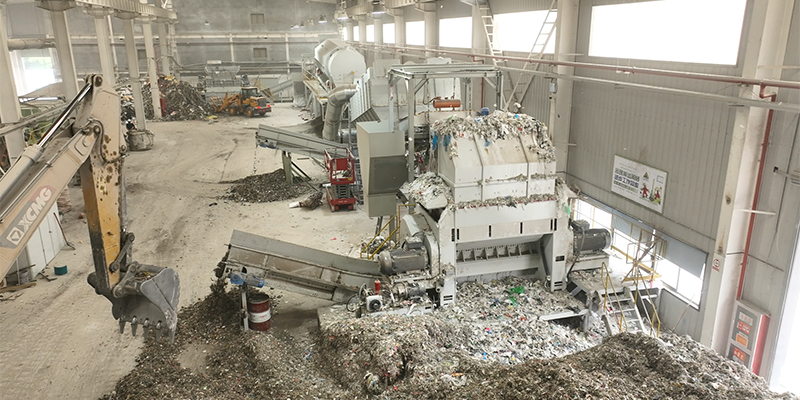
Municipal Solid Waste / SRF & RDF
Solid Recovered Fuel (SRF)
Turning waste into treasure, fueling a green future
Company positioning: Full-process closed-loop solution provider for SRF/RDF solid recovered fuel
Replace fossil energy such as coal and natural gas, reduce fuel procurement costs, hedge against energy price fluctuation risks
Reduce carbon emissions, helping enterprises/cities achieve dual-carbon targets
MISSION
Industry Pain Points and Our Mission
As a full-chain SRF/RDF solution provider, we center on "end-to-end closed-loop service," providing customized alternative fuel solutions for solid waste generators and energy consumers, achieving the triple value of solid waste reduction, energy substitution, and carbon emission reduction quantification, supporting the green and low-carbon transformation of cities and enterprises.
Empowering solid waste resource recovery through technology, illuminating a low-carbon future with green fuel
Solid Waste Generator End Preparation Plant Resource Processing Energy Consumer End
INDUSTRY CHALLENGES
Industry Predicament
Solid Waste Siege
Municipal solid waste and industrial solid waste disposal pressure surges, traditional landfilling/incineration methods carry high environmental costs and compliance risks
Energy Transition Pressure
Energy-consuming enterprises such as industrial boilers, cement kilns, and thermal power plants face the dual challenge of fossil energy price volatility and carbon emission reduction
Resource Mismatch
Large volumes of low-value solid waste cannot achieve efficient energy utilization, wasting resources while exacerbating environmental burdens
CORE SERVICE
SRF/RDF Full-Category Full-Process Solution
Centered on the core chain of "solid waste import (problem end) → professional collection and transport → preparation plant resource processing → fuel export (value end)," achieving full-process controllability, traceability, and quantifiability.
| Category | Definition | Applicable Scenarios |
|---|---|---|
| RDF (Refuse Derived Fuel) | Solid derived fuel made from municipal solid waste, municipal solid waste, and low-value industrial solid waste through crushing, sorting, drying, and forming | Waste incineration plants, thermal power plants, small industrial boilers, waste co-processing projects |
| SRF (Solid Recovered Fuel) | High-quality alternative fuel made from industrial solid waste, commercial waste, and production offcuts through refined sorting, conditioning, and forming | Cement kiln co-processing, large thermal power plants, biomass power plants, high-demand industrial boilers |
Providing raw material classification assessment, post-composition testing evaluation, and customized pretreatment solutions, controlling raw material quality and compliance from the source
- RDF raw material pain points: Municipal solid waste and municipal solid waste have complex composition, high moisture content, and many impurities; traditional disposal methods are costly and prone to secondary pollution
- SRF raw material pain points: Industrial solid waste and commercial waste have high impurity content and large calorific value fluctuations; direct disposal utilization rates are low, and enterprise compliance disposal pressure is high
For municipal/industrial clients, providing multiple models including fixed-point collection, door-to-door clearance, and park-level coordinated disposal
- Enclosed transport: Fully enclosed transport vehicles, eliminating spillage and odor leakage, avoiding secondary pollution
- Digital supervision: Full-process electronic manifests, trajectory tracking, smart cockpit monitoring, achieving full-process traceability from raw material generation to plant entry, meeting environmental and compliance requirements
RDF preparation process flow (simplified version) / SRF preparation process flow (refined version)
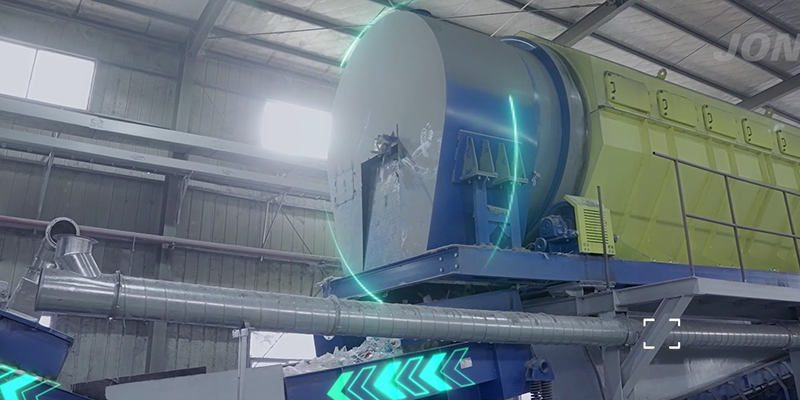
- Core equipment: Dual-shaft shear crusher, trommel screen, air classifier, magnetic separator, forming equipment, drying system (optional), operations management platform (hardware + software integration)
- Core equipment: Refined crushing system, intelligent optoelectronic sorter, air classification equipment, magnetic separation equipment, conditioning and forming system, drying line (optional), operations management platform, online quality testing system
Economic value / Ecological value / Environmental and compliance value
- Reduce solid waste landfill/incineration volume, alleviating "waste siege" pressure
- Full process compliant with solid waste disposal and environmental emission policies, avoiding compliance risks
- Reduce harmful gas emissions from traditional incineration, lowering environmental impact
PROCESS
Preparation Process Flow
RDF Preparation Process Flow (Simplified Version)
Raw material receiving → Crushing pretreatment → Sorting (impurity removal/de-ironing) → Drying and conditioning (optional) → Forming and pelletizing → Finished product storage- Core equipment: Dual-shaft shear crusher, trommel screen, air classifier, magnetic separator, forming equipment, drying system (optional), operations management platform (hardware + software integration)
- Process highlights: Customized crushing and sorting solutions for high-moisture, high-impurity raw materials, ensuring fuel forming rate and calorific value stability
SRF Preparation Process Flow (Refined Version)
Raw material receiving → Coarse crushing → Multi-stage sorting (air classification/magnetic separation/optoelectronic sorting) → Fine crushing → Conditioning and drying (optional) → Forming/pelletizing → Finished product homogenization and quality inspection- Core equipment: Refined crushing system, intelligent optoelectronic sorter, air classification equipment, magnetic separation equipment, conditioning and forming system, drying line (optional), operations management platform, online quality testing system
- Process highlights: Multi-stage refined sorting, efficient impurity removal, achieving precise control of fuel calorific value, moisture content, and particle size indicators to meet high-end energy application scenario requirements
CORE TECHNOLOGY
Technology and Process Highlights
Core technology advantages
Intelligent Sorting System
Using multi-stage combination of optoelectronic sorting + air classification + magnetic separation to efficiently remove impurities and ensure stable fuel quality
Customized Process Design
Providing exclusive RDF/SRF preparation process solutions based on raw material characteristics and customer energy requirements
Full-Process Digital Management and Control
Integrated management platform for raw material traceability, production monitoring, quality testing, and transport tracking, achieving transparent and data-driven production processes
Green Environmental Supporting Facilities
Low-noise crushing, dust collection system, achieving zero secondary pollution during the preparation process
APPLICATION CASE
Benchmark Case Showcase
CASE 01
Senge Environmental Industrial Waste Crushing and Sorting Project
- Location
- Jiangsu
- Processing Capacity
- 100 t/d
- Process Route
- Coarse crushing + ferromagnetic metal separation + particle size screening + density separation + fine crushing
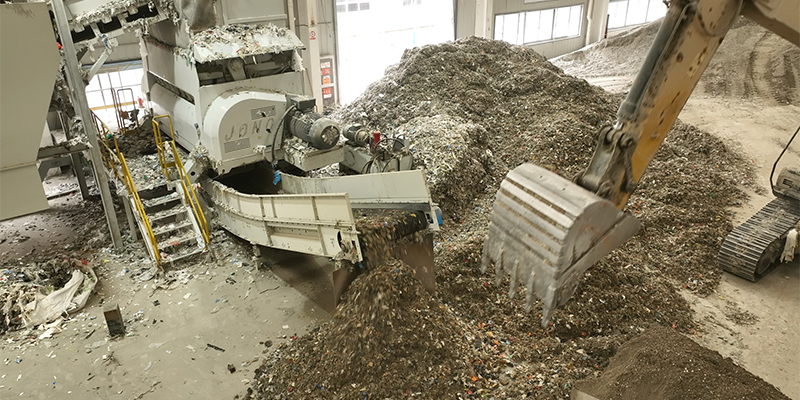
The project primarily disposes of general industrial solid waste and combustibles screened from renovation waste, with a processing capacity of 100 t/d. This project uses a process route of "coarse crushing + ferromagnetic metal separation + particle size screening + density separation + fine crushing," with the system mainly composed of dual-shaft coarse crusher, electromagnetic self-discharging iron remover, trommel screen, high-pressure density separator, and single-shaft fine crusher. Inorganic materials in the waste components — bricks, tiles, stones, sand and gravel (<20mm), and metals — are separated, and combustibles are finely crushed to uniform particle size (≤100mm), with optional baler for packaging or direct truck loading for transport to cement plants for incineration or external sale; system output categories include ferromagnetic metals, inert non-combustible materials, sand and gravel, and finished SRF fuel.
CASE 02
Aituo Environmental Industrial Solid Waste Disposal Project
- Location
- Zhejiang
- Processing Capacity
- 100 t/d
- Process Route
- Coarse crushing + ferromagnetic metal separation + fine crushing
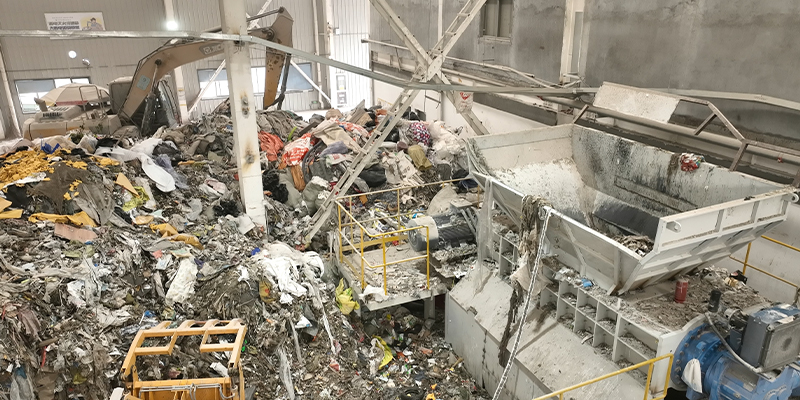
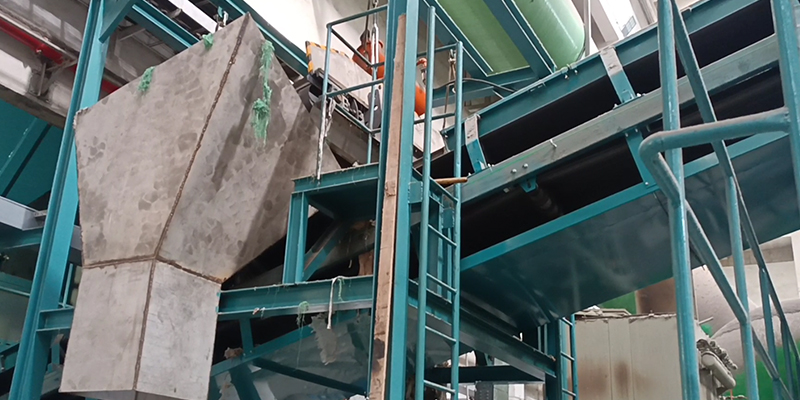
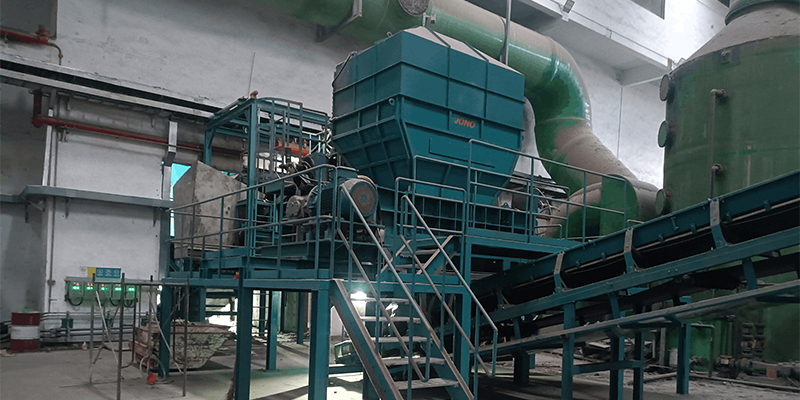
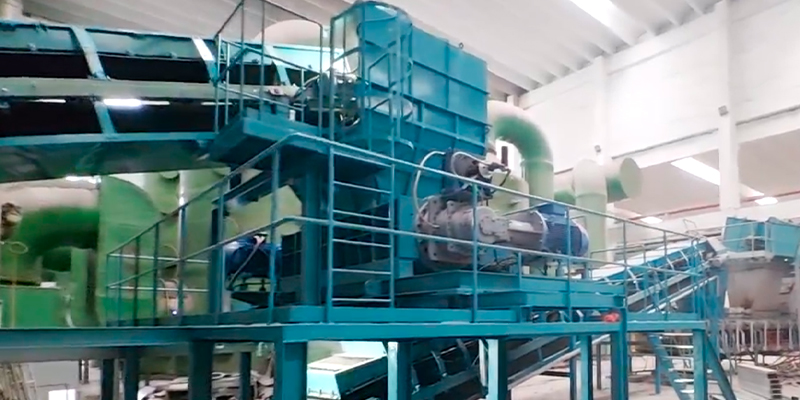
The project primarily disposes of mixed general industrial waste + combustibles sorted from renovation waste, with a processing capacity of 100 t/d. This system uses a process route of "coarse crushing + ferromagnetic metal separation + fine crushing," with the system mainly composed of coarse crusher, electromagnetic self-discharging iron remover, and fine crusher. After two-stage crushing, material size: 85% ≤150mm by weight, with some flexible materials exceeding 150mm.
CASE 03
Guangdong Dongguan Qishi Industrial Solid Waste Crushing and Baling Project
- Location
- Guangdong
- Processing Capacity
- 200 t/d
- Process Route
- Coarse crushing + particle size screening + density separation + fine crushing
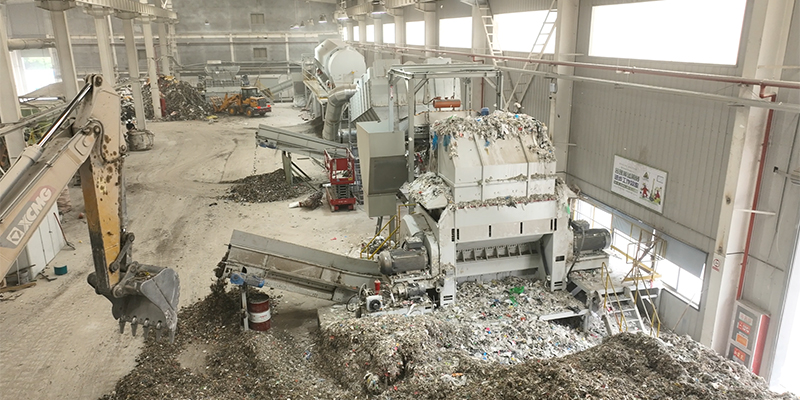
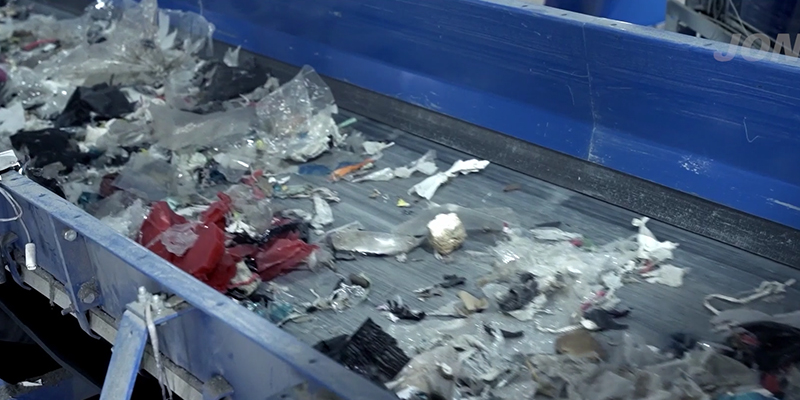
This project primarily disposes of general industrial solid waste, with a processing capacity of 200 t/d. Using a process route of "coarse crushing + particle size screening + density separation + fine crushing," the system is mainly composed of coarse crusher, electromagnetic self-discharging iron remover, trommel screen, high-pressure density separator, and fine crusher. Materials undergo coarse crushing, trommel screen screening, then secondary de-ironing to remove ferromagnetic metals, followed by entry into the high-pressure density air classifier, which separates lightweight and heavyweight materials through air classification. Heavy materials directly fall into the lower heavy material inert storage area, while lightweight materials continue conveying backward into the fine crusher, further reducing material particle size. The final product continues conveying into the distribution belt conveyor, with the option to enter the main route for direct transport to the rear baling and wrapping system for baling and wrapping operations, with the resulting bales stacked uniformly in the product stacking area; alternatively, it can enter the bypass route, directly entering the briquetting and pelletizing system for briquetting and pelletizing, with the final products stacked in the pelletized product storage area.
Municipal Solid Waste
Related Content
 Municipal Solid Waste
 Customer Cases
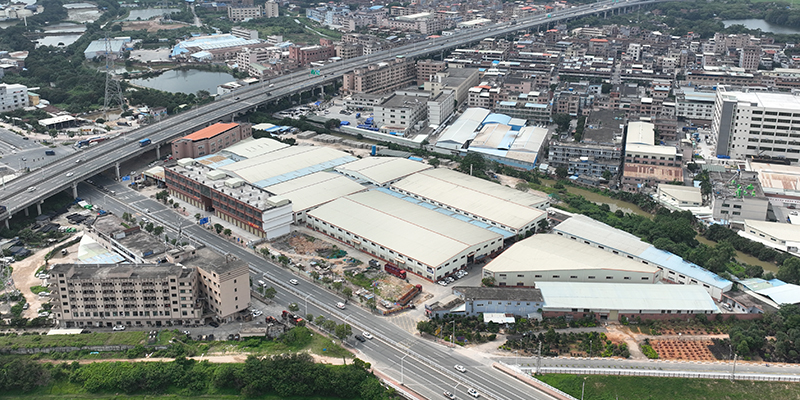
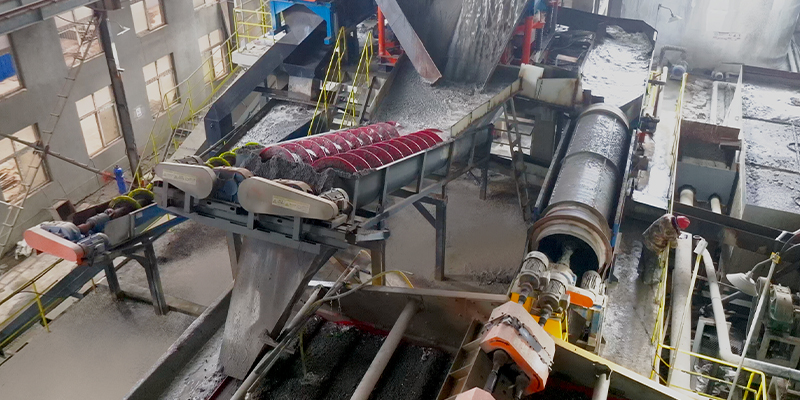
Covering multiple benchmark projects in the resource recovery industry, showcasing JONO's project practices and delivery results in municipal solid waste resource recovery scenarios.
 Municipal Solid Waste
 Waste Textile Solution
Waste textile recycling is an important initiative to promote green development. From an environmental perspective, it effectively reduces pollution from waste landfilling and incineration, lowers resource consumption and carbon emissions, and supports ecological protection. From an economic perspective, it enables circular utilization of waste resources, reduces raw material costs, and fosters new industry chains and employment opportunities. The industry still faces many challenges, especially in "pre-treatment and...
 Municipal Solid Waste
 Incineration Bottom Ash Solution
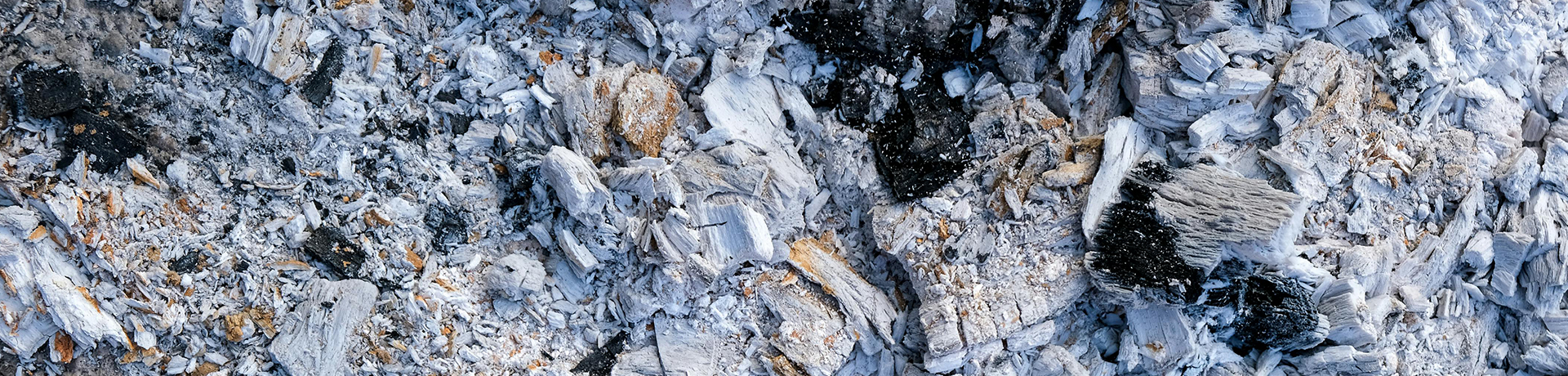
Bottom ash is a byproduct of municipal solid waste incineration, accounting for approximately 20%-30% of total waste volume, primarily composed of glass, slag, ceramic and brick fragments, stones, iron, and other metals; without proper treatment, it will inevitably cause secondary environmental pollution.