





Photovoltaic Panel Recycling 1. Industry Pain Points With the widespread adoption of large-scale photovoltaic power stations in China, early grid-connected PV modules are successively entering their retirement cycle. Massive quantities of waste photovoltaic panels urgently need compliant treatment, and the PV recycling industry is entering an explosive period. However, the current industry overall faces numerous chaotic practices and technical shortcomings that constrain standardized, industrialized development. First, there is serious market disorder: a large number of unqualified small workshops are rampant, mostly using backward processes such as incineration, strong acid immersion, and crude crushing to dismantle PV panels. PV modules contain hazardous substances such as lead, cadmium, and fluorine; non-compliant treatment causes permanent soil, groundwater, and atmospheric pollution. Meanwhile, waste PV modules have been included in the hazardous waste catalog, and enterprises face high fines and legal risks for non-compliant disposal. Second, technical levels are backward: traditional recycling models are highly dependent on manual labor, with industry labor dependency exceeding 60%, extremely low disassembly efficiency, and difficulty in achieving refined separation of EVA film, tempered glass, silicon wafers, silver paste, and copper strips, resulting in insufficient purity of various recycled materials, low resource recovery rates, and massive waste of precious metals and silicon materials. Finally, high costs, difficult profitability, and incomplete industry chains: small recycling equipment has poor adaptability and high energy consumption, while complete imported equipment investment costs are prohibitively high for small and medium recycling enterprises; simultaneously, the industry lacks standardized recycling production lines, with broken recycling, disassembly, purification, and regeneration closed loops, low capacity utilization rates, and most compliant recycling enterprises unable to achieve large-scale profitability, severely hindering the development of the photovoltaic solid waste resource recovery industry. 2. Detailed Solution Introduction Addressing core pain points in the photovoltaic panel recycling industry such as non-compliant environmental practices, low disassembly precision, high labor costs, serious resource waste, and limited capacity, we have created a fully automatic physical process photovoltaic panel recycling complete equipment production line, abandoning traditional polluting processes such as chemical corrosion and high-temperature incineration, using dry physical crushing, graded sorting, and refined separation technology throughout, with zero waste liquid, zero waste gas, and zero secondary pollution, fully complying with national solid waste treatment environmental standards, compatible with various types of waste monocrystalline, polycrystalline, thin-film PV modules, damaged PV panels, and decommissioned power station PV panel recycling and disassembly operations. The entire production line features modular integrated design, with equipment flexibly combinable according to customer capacity requirements, supporting small workshop upgrades, medium factory mass production, and large industrial park scaled production, adaptable to the deployment needs of enterprises of different scales. The entire recycling process forms a complete closed loop, with full automatic completion from raw material feeding to finished product output, requiring no extensive manual intervention. The first step is raw material pretreatment: the equipment is equipped with an intelligent screening and feeding system that automatically screens complete modules and broken modules, removes surface dust and impurities, and uniformly standardizes material specifications to prevent impurities from affecting subsequent sorting precision. The second step is enclosed crushing and disassembly: through multi-stage quiet crushing equipment, precisely crushing the PV panel laminated structure, separating tempered glass from laminated core components, and thoroughly breaking apart the EVA film adhesive structure. The third step is air flow classification and sorting: using specific gravity differences, through professional air flow sorting equipment to separate glass fragments, adhesive fragments, and metal mixed materials. The fourth step is high-precision electrostatic separation: targeting different conductivity rates of silicon powder, silver paste, copper, aluminum, and other materials, precisely sorting various precious metals and silicon materials. Finally, material collection and output is completed, with classified output of high-purity recycled glass, silicon material, copper/silver metal particles, and other secondary-use raw materials. The entire solution's core advantages lie in green environmental protection, high recovery rate, low operating costs, and fully automatic intelligence. The entire process is dry physical operation with no chemical reagent addition, eliminating acid/alkali waste liquid and toxic waste gas generation from the source, with 100% EIA approval rate; equipment optimized crushing and sorting algorithms effectively solve the problems of incomplete separation and material mixing in traditional equipment, significantly improving recycled material purity; automated control system with one-key start/stop, equipped with intelligent monitoring system for real-time monitoring of equipment energy consumption and operating status, significantly reducing manual input and lowering labor costs; simultaneously, equipment has low failure rate and low energy consumption, with low upfront investment cost and cost-effectiveness far exceeding imported equipment, helping small and medium recycling enterprises quickly deploy production, connecting the complete industry chain of "waste PV panel recycling — refined disassembly — material regeneration — resource reuse," achieving both environmental compliance and commercial profitability. 3. Sub-Functions (Detailed Description)
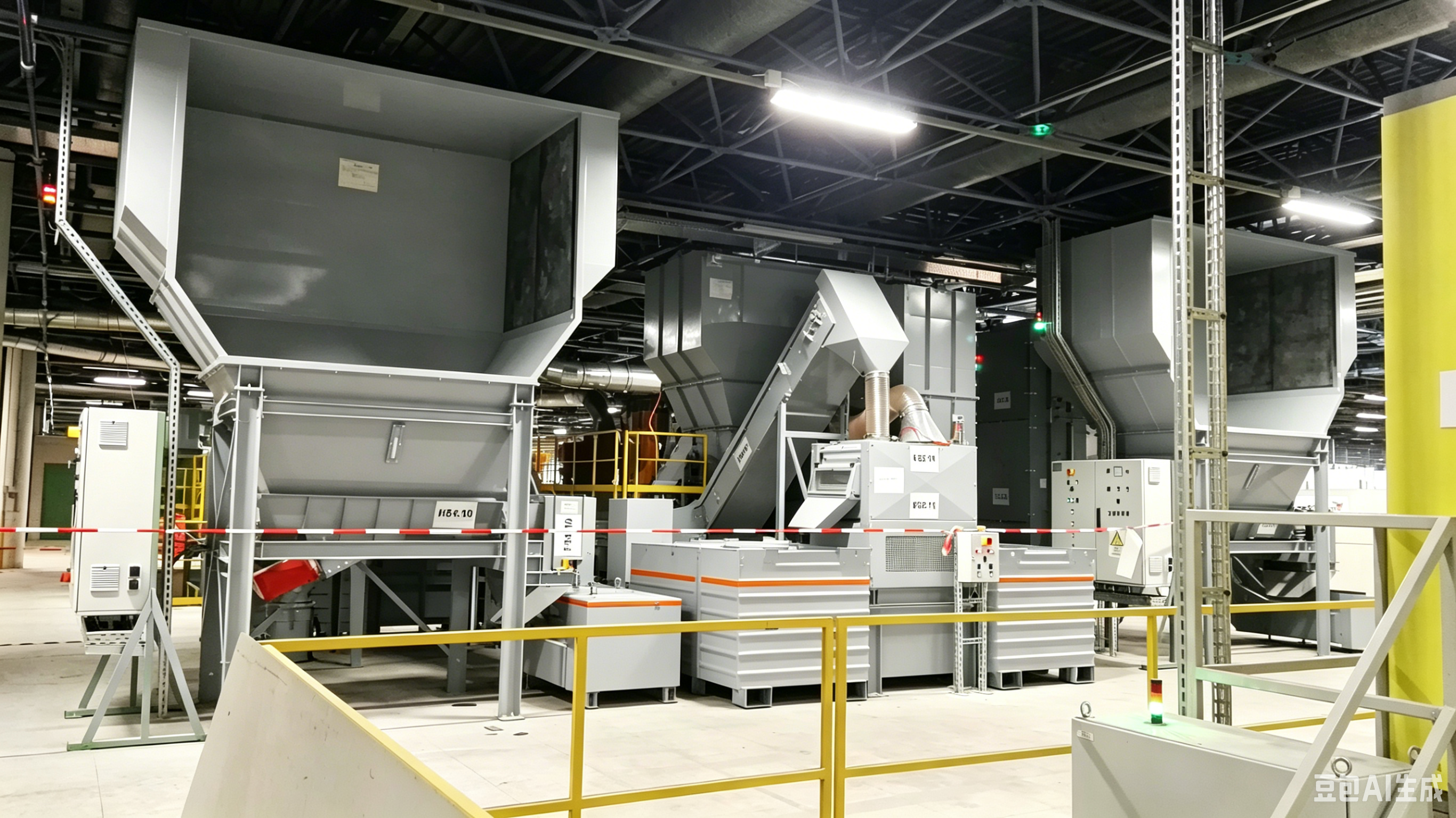
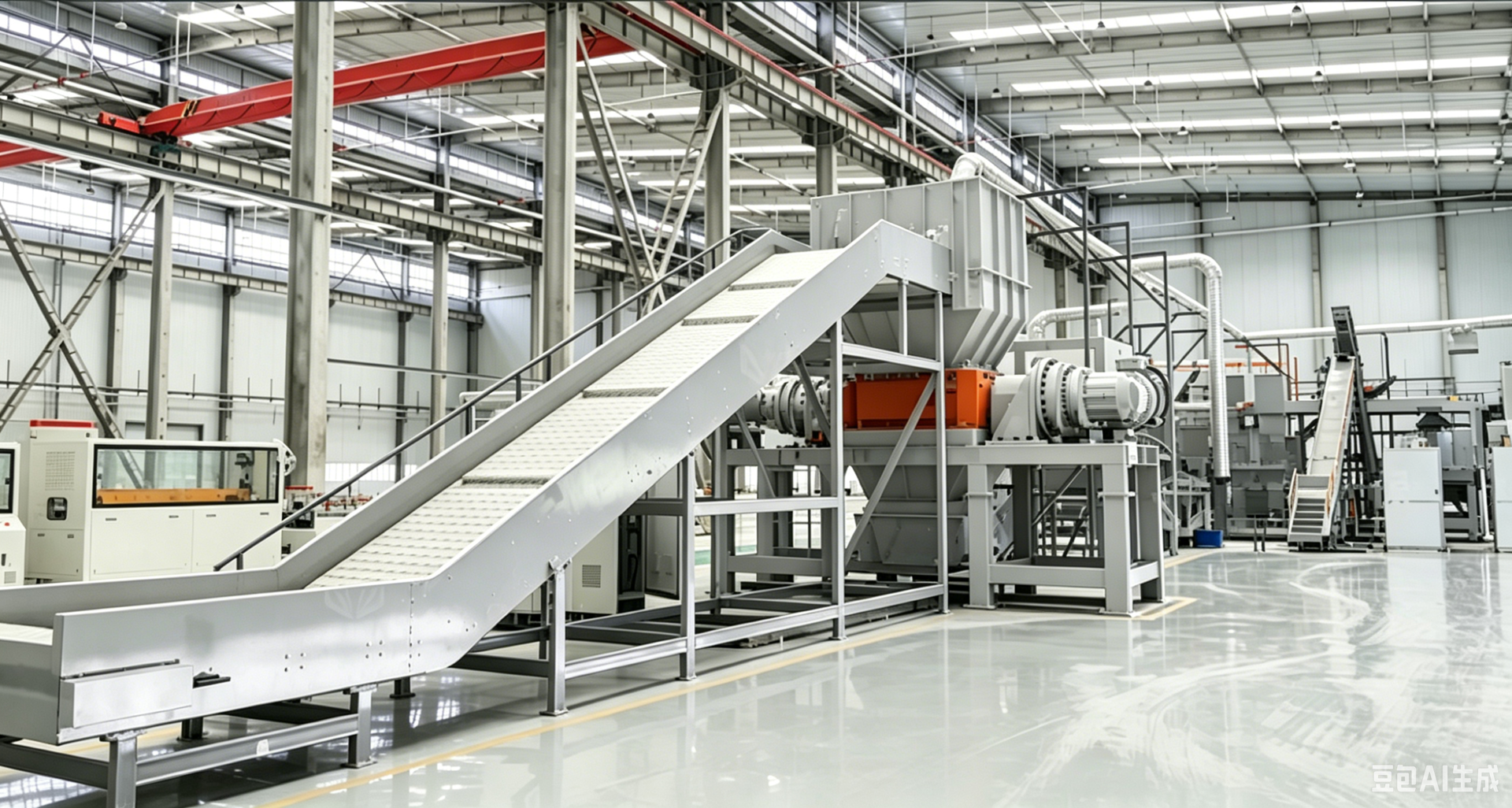
The equipment is equipped with a fully automatic conveying and feeding unit and intelligent screening device, supporting batch continuous feeding, capable of automatically identifying complete PV modules and broken fragment materials, automatically filtering mud, sand, bracket debris, plastic accessories, and other ineffective impurities, and standardizing material dimensions. The entire process features enclosed conveying, eliminating dust leakage, while being compatible with PV panels of different specifications and sizes without requiring manual cutting pretreatment, significantly saving feeding labor and ensuring subsequent crushing and sorting stability.
Using a two-stage quiet precision crushing structure, coarse crushing breaks apart the overall PV panel structure, while fine crushing strips EVA film, backsheet, glass, and cells, specifically addressing the challenge of PV panel multi-layer composite bonding. The equipment features fully enclosed design paired with pulse dust collection system, with no dust leakage during operation, noise below industry standards, uniform and controllable crushing particle size, laying the foundation for subsequent refined sorting and avoiding metal loss from excessive crushing.
Based on specific gravity differences of different materials, through an adjustable air flow sorting system, precisely separating lightweight EVA film fragments and backsheet powder from heavyweight glass particles and cell metal materials, effectively distinguishing non-metallic impurities from valuable materials, preliminarily purifying recycled raw materials, reducing subsequent electrostatic separation pressure, and significantly improving overall sorting purity and recovery rate.
As the core sorting module, relying on the principle of differentiated conductivity of different materials, precisely separating silicon material, copper, silver, aluminum, and other various valuable metals from non-metallic materials, achieving independent output of various materials without cross-contamination. After equipment sorting, silicon material has high purity with minimal metal impurities, significantly improving precious metal recovery rate and maximizing the remaining economic value of waste PV panels.
The entire production line is equipped with integrated pulse dust collection equipment, with full-process negative pressure dust collection, precisely collecting fine dust generated during operations, with dust collection rate as high as 99.8%, zero dust pollution. The entire process is dry physical operation with zero wastewater, exhaust gas, or solid waste secondary emissions, fully meeting various regional environmental acceptance standards, suitable for compliant factory mass production operations.
Equipped with PLC intelligent control system, one-key start/stop of the entire equipment set, supporting automated continuous operation, with real-time viewing of equipment operating parameters, energy consumption data, and production output. The system features self-diagnosis, overload protection, and automatic shutdown functions, reducing equipment wear and failure downtime, simple and easy to operate, with ordinary workers able to independently operate after brief training. 4. Application Cases (Including Data Results) Case 1: A Jiangsu photovoltaic industrial park supporting solid waste treatment enterprise, undertaking recycling operations for park PV production defective products, engineering scrapped modules, and distributed PV decommissioned modules, requiring standardized, large-scale, environmentally friendly recycling production lines. In 2025, our modular PV panel recycling equipment production line was deployed, compatible with multi-category PV module recycling operations. Since project commissioning, equipment comprehensive capacity has stabilized at 7 tons/day, compatible with monocrystalline, polycrystalline, and thin-film full-category PV panel disassembly; overall comprehensive resource utilization rate improved to 94%, eliminating raw material waste; the entire process has zero chemical pollution and zero dust leakage, becoming the park's standardized environmental demonstration recycling project. The equipment's automated operation mode allows the plant to complete full-day mass production operations with only 2 O&M personnel, reducing operational energy consumption by 22%, helping the enterprise quickly connect upstream and downstream supply chains and become a local compliant benchmark PV recycling enterprise. 5. Scene Image Description (Adapted for website images, 3-5 precise positioning) 6. Solution Value
The entire equipment set uses dry physical environmental process with zero secondary pollution, fully aligning with national solid waste treatment and hazardous waste disposal standards, helping enterprises completely abandon small workshop non-compliant operation models, smoothly passing EIA acceptance, eliminating dust, waste liquid, and heavy metal pollution issues, avoiding high environmental fines and business risks, supporting enterprises in compliant and standardized operations.
Equipment features fully automatic intelligent operation, significantly reducing manual O&M costs; high-precision sorting technology maximizes extraction of valuable materials such as silicon, copper, and silver within PV panels, improving recycled material purity and market price. Simultaneously, equipment has low energy consumption, low failure rate, and high upfront investment cost-effectiveness, suitable for large, medium, and small enterprises, effectively solving the industry pain points of low capacity and difficult profitability, significantly improving overall enterprise revenue and profit margins.
Breaking the problem of fragmented traditional PV recycling industry chains, achieving the full closed loop of waste PV panels "recycling — disassembly — purification — regeneration and reuse," promoting decommissioned PV module resource recovery, harmless treatment, and industrialization, supporting the PV industry in achieving full lifecycle green development, and improving the new energy solid waste resource recovery industry system.
Through efficient recycling and regeneration technology, enabling waste PV materials to be circularly reused, reducing mineral resource extraction, lowering environmental pollution from solid waste landfill and incineration, reducing carbon emissions, practicing green and low-carbon development concepts, supporting the sustainable development of the new energy industry and the national dual-carbon strategy.
- Intelligent Automatic Feeding and Screening Function
- Multi-Stage Enclosed Crushing and Disassembly Function
- Air Flow Specific Gravity Classification and Sorting Function
- High-Precision Electrostatic Separation Function
- Intelligent Dust Collection and Environmental Purification Function
- Intelligent Electrical Control and O&M Function
- Compliance Value: Avoiding Environmental and Legal Risks
- Economic Value: Cost Reduction and Revenue Increase, Expanding Profit Margins
- Industry Value: Perfecting the Photovoltaic Resource Closed-Loop Industry Chain
- Social Value: Green and Low-Carbon, Supporting Dual-Carbon Goals
Gallery