
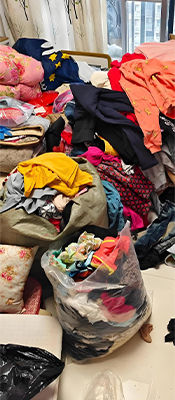
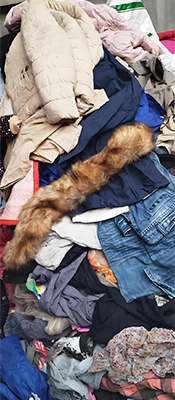
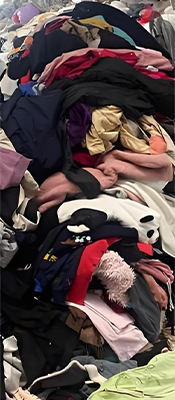
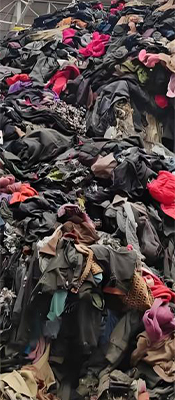
Used clothing, used home textiles, waste non-woven fabrics, textile waste
Industry Center
Four Core Sectors Mining & Infrastructure, Food Processing, Municipal Solid Waste, Resource RecyclingOre Sorting & Mobile Crushing
XRT, HSI, LIBS, and mobile stations work together for mine waste rejection, grade improvement, and waste rock utilization.Protein, Fruit & Vegetable Processing
3D vision, hyperspectral imaging, X-ray, and intelligent cutting improve sorting, portioning, and processing efficiency.City-wide Integrated Solution
Solutions for household waste, construction and demolition waste, organic waste, plastic recycling, and incineration bottom ash recovery.Wind Turbine, Lithium Battery, PV Panel & Metal Recycling
Full-lifecycle resource recovery for new energy recycling, e-waste, and recycled metals.Product Center
Six Product Lines The intelligent foundation for sensing, embodiment, and decision-making
Multimodal Perception & Precision Execution Agent
An integrated hardware-software platform combining atomic-level perception with micrometer-level execution.
Intelligent Backbone for Material Flow
Integrated intelligent pipelines and dynamic conveying systems that make every material movement transparent and traceable.
The Touch and Brain of Material Flow
A full-scenario digital gateway, business intelligence center, and swarm-intelligence scheduling platform.
Embodied Execution Agent
An intelligent platform for crushing, flexible mobile sorting, and robotic execution.
Foundation of Mechanical Sorting
Software-defined standardized mechanical sorting units for high-throughput physical separation.
Neural System for Intelligent Industrial Control
A next-generation platform for industrial intelligent control and edge computing.
Municipal Solid Waste / Waste Textile
Waste textile recycling is an important initiative to promote green development. From an environmental perspective, it effectively reduces pollution from waste landfilling and incineration, lowers resource consumption and carbon emissions, and supports ecological protection. From an economic perspective, it enables circular utilization of waste resources, reduces raw material costs, and fosters new industry chains and employment opportunities. The industry still faces many challenges, especially in the "pre-treatment and sorting" stage, where mixed materials, complex compositions, and insufficient automated sorting technology lead to low efficiency and high costs, becoming key bottlenecks constraining large-scale, high-value utilization.
SOLUTION
We are deeply engaged in the field of waste textile resource regeneration, creating an exclusive complete physical regeneration solution covering the full chain of intelligent sorting, precise cutting, deep impurity removal, and high-value utilization of waste clothing. The core of the solution integrates hyperspectral imaging recognition with AI intelligent algorithms, paired with customized cutting processes, breaking through traditional sorting pain points, ensuring recycled material purity meets standards, and helping customers expand into diverse high-value application scenarios such as recycled fibers.
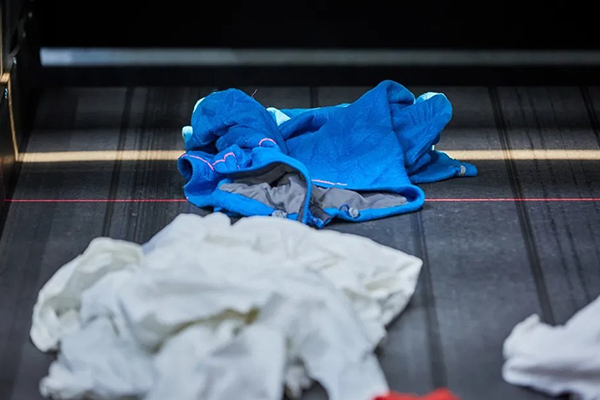
INPUT & OUTPUT
Used clothing, used home textiles, waste non-woven fabrics, textile waste
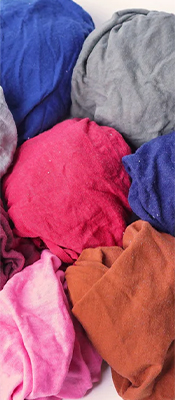
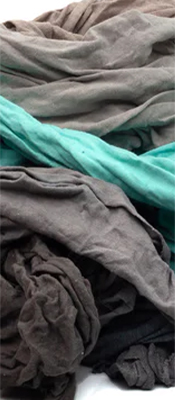
Cotton fabric material, acrylic fabric material, polyester fabric material, nylon fabric material


CORE TECHNOLOGY
The system integrates hyperspectral identification, machine vision, and X-ray technology to achieve textile composition analysis (≥98%), color classification (≥98%), and hard object detection. Hyperspectral analysis identifies fiber materials, vision algorithms precisely recognize colors, and X-ray synchronously detects metal/hard foreign objects (such as buttons, zippers), ensuring efficient and safe sorting.

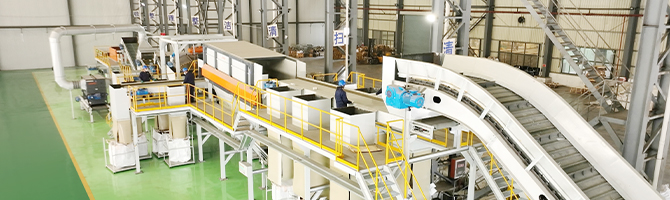
The system integrates self-learning algorithms and autonomous model updates, dynamically optimizing identification accuracy, adapting to new fabric types, and filtering anomalous data, continuously improving detection reliability. It supports remote debugging to reduce operation and maintenance costs, and adopts modular conveyor design, flexibly adjusting conveyor belt layout and quantity to adapt to different plant structures and capacity requirements, achieving rapid deployment and expansion.
ADVANTAGES
Relying on proprietary + AI core technology, achieving precise identification of waste textile composition and foreign objects, with pure component identification accuracy above 98%, blend identification error ≤2%, and sorting speed reaching 1.5 seconds per item, 5-8 times more efficient than traditional manual sorting, completely solving the industry's core pain points of difficult blend separation, low sorting precision, and low efficiency, significantly improving resource utilization rates.
Using modular design, the conveyor system can be flexibly assembled with components added or removed, adapting to different scale plants and various site shapes, meeting both the large-scale sorting needs of large waste textile processing plants and the lightweight processing needs of small and medium enterprises, without requiring large-scale site modifications, reducing customers' upfront investment costs.
The system features three major intelligent functions: AI self-learning, autonomous model updates, and remote debugging, requiring no manual model optimization, with simple post-operation maintenance; the remote debugging function enables offsite technical support, reducing on-site operation and maintenance staffing, while replacing traditional manual sorting, lowering labor costs and manual operation risks, enabling sorting workers to transition from high-risk, tedious sorting work to high-skill O&M positions.
Through precise sorting, waste textiles are separated into high-purity pure components and fixed-ratio blend raw materials, directly connecting to high-end recycled markets (such as recycled clothing, automotive interiors); compared to traditional low-value-added utilization models, unit raw material value increases 3-5 times; simultaneously reducing waste material loss, improving resource utilization rates, further increasing customer profit margins, and helping customers achieve high-value transformation.
The entire processing flow produces no harmful gas or wastewater emissions, complying with national environmental standards and dual-carbon target requirements, helping customers implement environmental policies and avoid environmental compliance risks; simultaneously helping customers obtain green certification, enhancing corporate green image, aligning with the global green supply chain restructuring trend, and strengthening customer market competitiveness.
Municipal Solid Waste
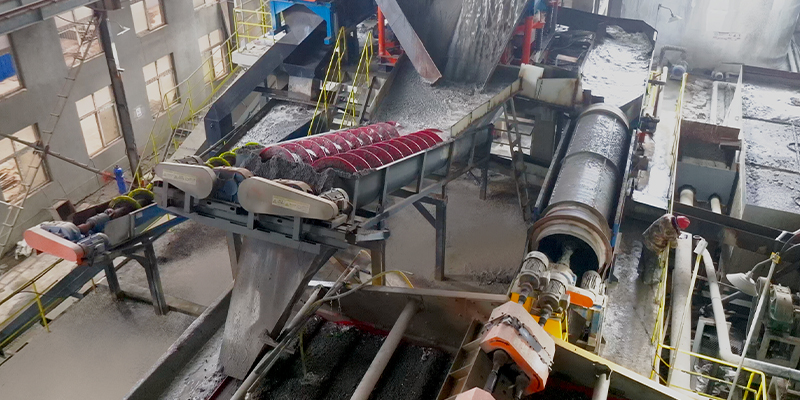 Municipal Solid Waste
 Covering multiple benchmark projects in the resource recovery industry, showcasing JONO's project practices and delivery results in municipal solid waste resource recovery scenarios.
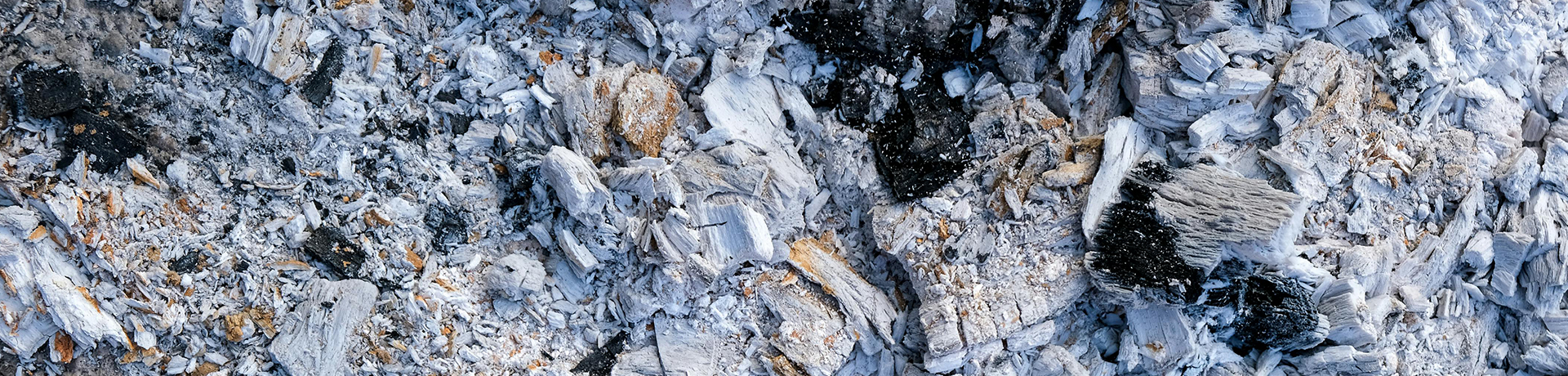 Municipal Solid Waste
 Bottom ash is a byproduct of municipal solid waste incineration, accounting for approximately 20%-30% of total waste volume, primarily composed of glass, slag, ceramic and brick fragments, stones, iron, and other metals; without proper treatment, it will inevitably cause secondary environmental pollution.
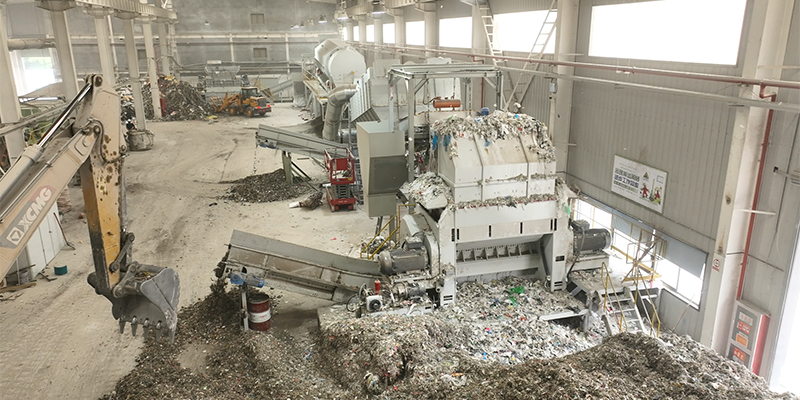 Municipal Solid Waste
 Company positioning: Full-process closed-loop solution provider for SRF/RDF solid recovered fuel