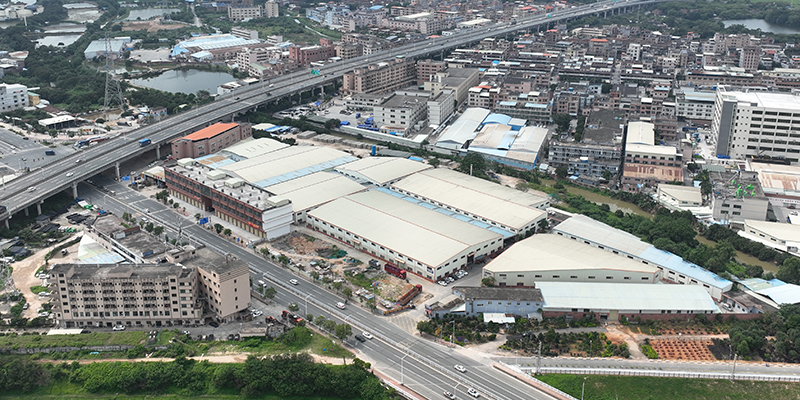






Guangdong Dongguan Qishi Industrial Solid Waste Shredding and Baling Project
This project primarily processes general industrial solid waste with a capacity of 200 t/d. It adopts the process route of 'coarse shredding + particle size screening + density sorting + fine shredding.'
Case Overview
This project primarily processes general industrial solid waste with a capacity of 200 t/d. It adopts the process route of “coarse shredding + particle size screening + density sorting + fine shredding.” The system mainly consists of a coarse shredder, electromagnetic self-unloading iron remover, trommel screen, high-pressure density separator, and fine shredder. Materials undergo coarse shredding and trommel screening, then secondary iron removal to extract ferromagnetic metals…
Project Parameters
| Parameter | Details |
|---|---|
| Application Scenario | Solid Recovered Fuel |
| Project Location | Guangdong |
| Processing Capacity | 200 tons/day |
Project Background and Treatment Objectives
The Guangdong Dongguan Qishi Industrial Solid Waste Shredding and Baling Project belongs to the solid recovered fuel scenario, located in Guangdong, with a processing capacity of 200 t/d.
This project primarily processes general industrial solid waste with a capacity of 200 t/d. It adopts the process route of “coarse shredding + particle size screening + density sorting + fine shredding.” The system mainly consists of a coarse shredder, electromagnetic self-unloading iron remover, trommel screen, high-pressure density separator, and fine shredder.
Materials undergo coarse shredding and trommel screen screening, then secondary iron removal to extract ferromagnetic metals, followed by entry into the high-pressure density air separator. Through air separation, light and heavy materials are separated, with heavy materials directly falling into the heavy material inert temporary storage area below, while light materials continue to be conveyed backward into the fine shredder. Under fine shredding action, material particle size is further reduced. The final product continues through conveying into a distribution belt conveyor. The final product can choose to enter the main route, directly conveyed to the downstream baling and wrapping system for baling and wrapping operations. The resulting bales are uniformly stacked in the product stacking area. Alternatively, it can choose to enter the bypass route, directly entering the briquetting and pelletizing system for briquetting and pelletizing, with the final product stacked in the pelletized product storage area.
Process Route and System Configuration
Centered around project treatment objectives, the solution focuses on process organization, core equipment coordination, and material sorting pathways, forming a stable treatment and resource recovery flow.
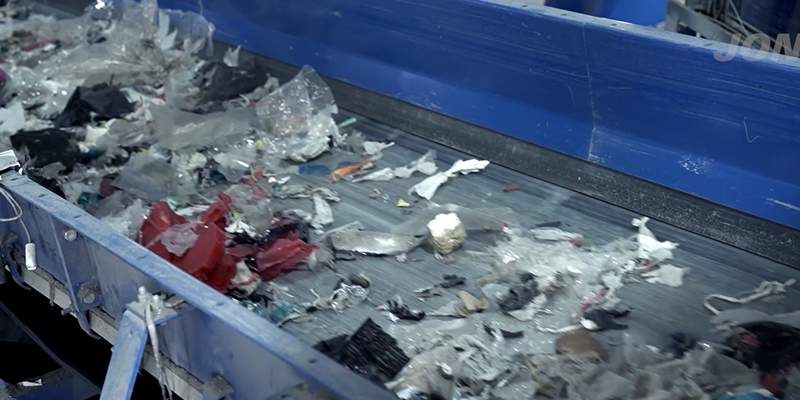
Adopting the process route of “coarse shredding + particle size screening + density sorting + fine shredding.” The system mainly consists of a coarse shredder, electromagnetic self-unloading iron remover, trommel screen, high-pressure density separator, and fine shredder.
Materials undergo coarse shredding and trommel screen screening, then secondary iron removal to extract ferromagnetic metals, followed by entry into the high-pressure density air separator. Through air separation, light and heavy materials are separated, with heavy materials directly falling into the heavy material inert temporary storage area below, while light materials continue to be conveyed backward into the fine shredder. Under fine shredding action, material particle size is further reduced. The final product continues through conveying into a distribution belt conveyor. The final product can choose to enter the main route, directly conveyed to the downstream baling and wrapping system for baling and wrapping operations. The resulting bales are uniformly stacked in the product stacking area.
Alternatively, it can choose to enter the bypass route, directly entering the briquetting and pelletizing system for briquetting and pelletizing, with the final product stacked in the pelletized product storage area.
Sorted Output and Resource Recovery Value
The project’s value is reflected in material resource recovery, final output, environmental compliance, and operational efficiency.
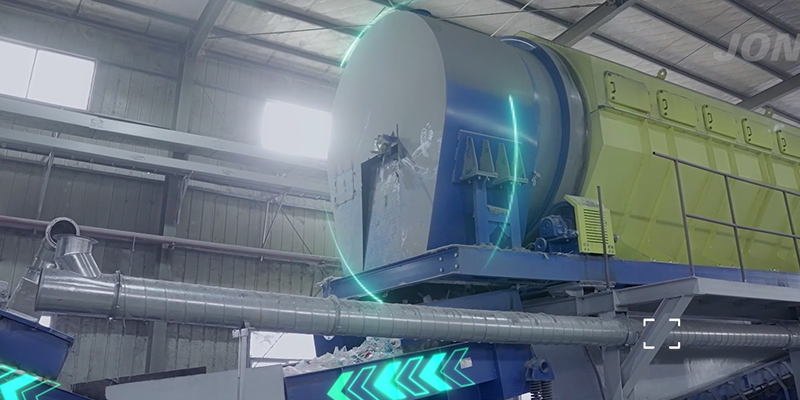
Materials undergo coarse shredding and trommel screen screening, then secondary iron removal to extract ferromagnetic metals, followed by entry into the high-pressure density air separator. Through air separation, light and heavy materials are separated, with heavy materials directly falling into the heavy material inert temporary storage area below, while light materials continue to be conveyed backward into the fine shredder. Under fine shredding action, material particle size is further reduced. The final product continues through conveying into a distribution belt conveyor. The final product can choose to enter the main route, directly conveyed to the downstream baling and wrapping system for baling and wrapping operations. The resulting bales are uniformly stacked in the product stacking area.
Alternatively, it can choose to enter the bypass route, directly entering the briquetting and pelletizing system for briquetting and pelletizing, with the final product stacked in the pelletized product storage area.